
Polished concrete
Polished concrete — a material with weight, made by hand.
Hand‑cast, mechanically ground and sealed in‑studio or in‑situ. Polished concrete is the sister craft to microcement — heavier, more sculptural, and finished with the same attention to colour, edge and surface.
Polished concrete is a hand‑cast, mechanically ground architectural surface — worktops, islands, vanities, hearths and floors poured to commission at 20–100mm, then diamond‑polished and sealed. The sister craft to microcement, made by hand in Cornwall by Jonathan Heywood.
An architectural surface, not a finish
Where microcement is a 2–3mm coating applied over an existing surface, polished concrete is the surface itself — poured, set and then mechanically ground back to expose the density and grain of the cured material. Worktops are typically cast at 20–40mm, with shadow gaps and undermount detailing formed in the mould. Floors are poured at 50–100mm and diamond‑ground in successive passes from coarse to fine grit.
Jonathan casts worktops, islands, vanities and basins to commission, and pours floors on larger refurbishments across Cornwall. Every piece is one‑of‑one: the pigment, aggregate, edge profile and final polish level are chosen for the project.
How it's made
- Templating. A 1:1 template is taken on site for worktops, vanities and basins — every cut‑out, tap hole and overhang is recorded before the cast is started.
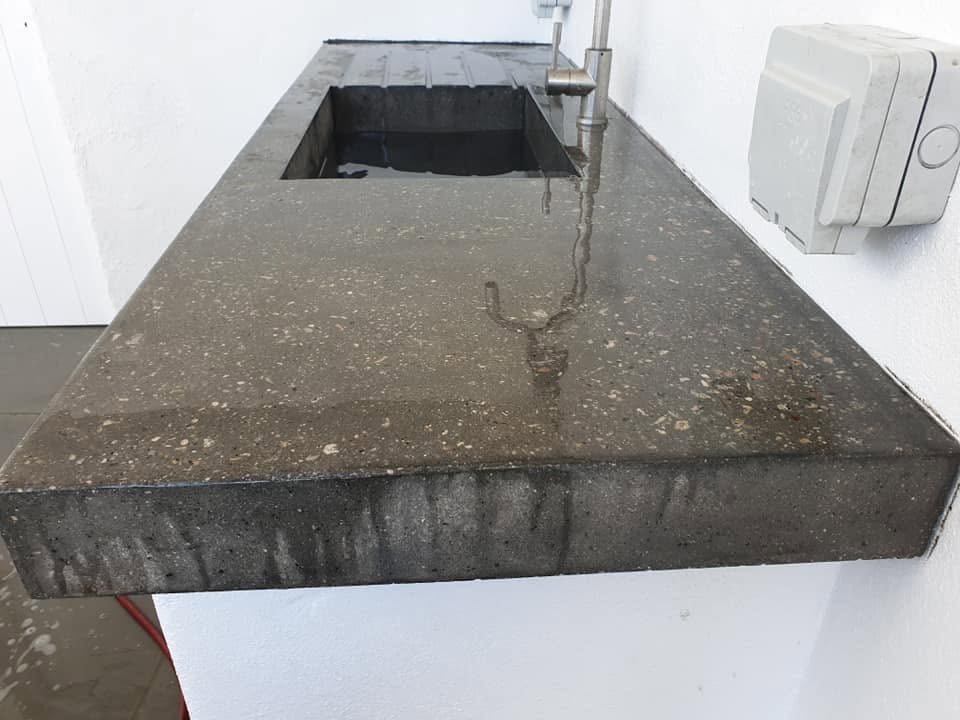
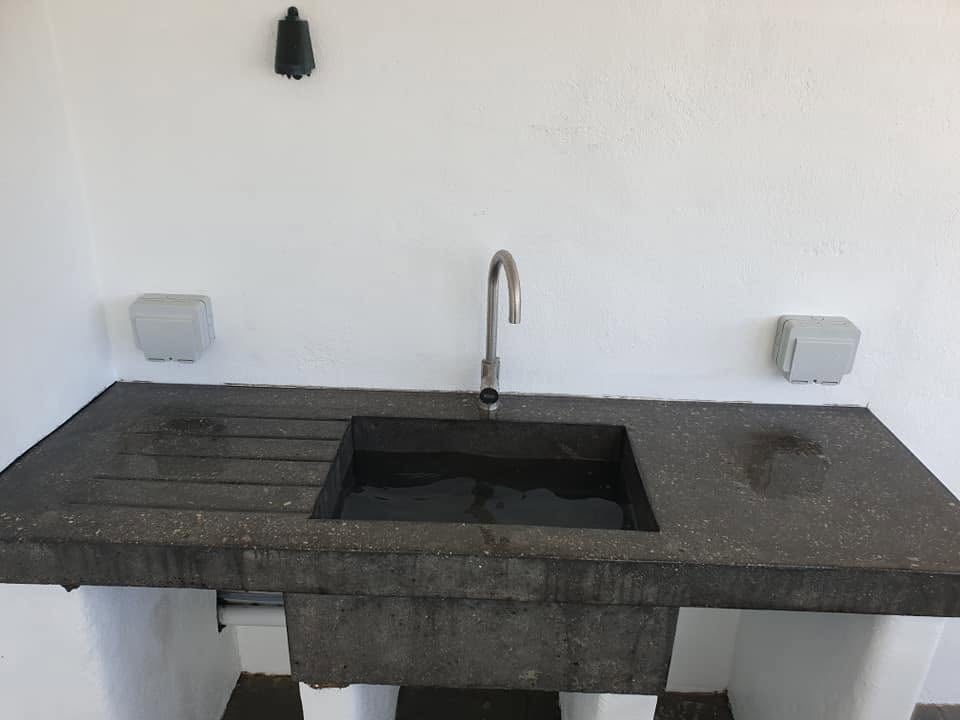
- Mould build. Forms are built from melamine‑faced ply or silicone, with embedded steel or basalt reinforcement. Sink cut‑outs, drainage grooves and shadow reveals are formed in the mould — not cut afterwards.
- The pour. A high‑strength, low‑shrinkage GFRC or fine‑aggregate concrete is hand‑placed and vibrated to consolidate. Pigment is integral to the mix, not painted on.
- Cure & demould. Pieces cure under controlled humidity for 5–10 days before the mould comes off and grinding begins.
- Grind & polish. Diamond pads from 50‑grit through to 3000‑grit are worked across the surface in successive passes. The level is chosen by the client — from a soft honed matte to a deep architectural polish.
- Seal. A penetrating densifier followed by a food‑safe, stain‑resistant topical sealer protects the surface for daily use. Sealers are re‑applied periodically as part of normal care.
Where it works best
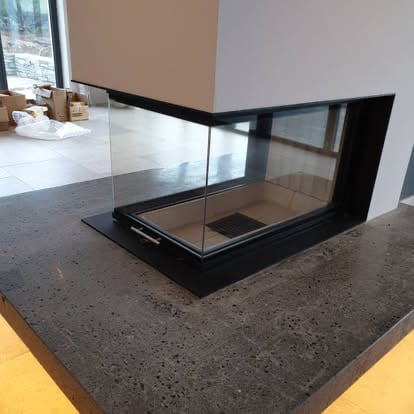
Polished concrete excels where a piece is meant to read as a single, weighty object — a kitchen island, a long galley worktop, a vanity carved with an integral basin, a fireplace hearth, a freestanding bath surround. For wall‑mounted and lighter applications, microcement is usually the more practical choice.
Care & honesty about the material
Concrete is a real, mineral material. Sealed correctly it shrugs off everyday cooking, water and wine. Left unsealed or treated carelessly, it will mark — and that's part of choosing it. A small amount of patina over years is a feature of the surface, not a fault. Sealer is renewed every 12–24 months on worktops in heavy use, and the surface can be re‑ground if a deeper restoration is ever wanted.
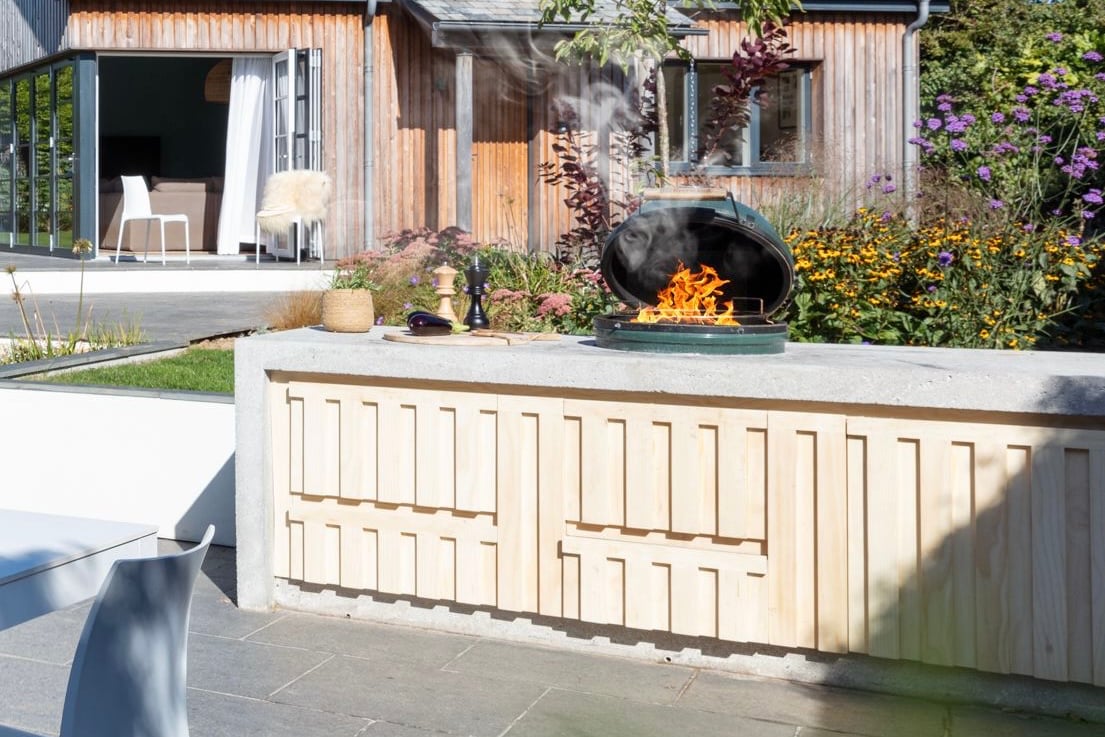
Best for
- Kitchen worktops & islands
- Vanity units with integral basins
- Fireplace hearths & surrounds
- Freestanding bath surrounds
- Poured‑in‑place floors over new screed
- Sculptural pieces — benches, tables, plinths
What you get
Features that set this installation apart.
- Cast to template — every worktop one‑of‑one
- Integral pigment — colour goes the whole way through
- Aggregate or smooth surface — your choice at the polish stage
- Edge profiles: square, eased, bullnose, waterfall, mitred to 45°
- Integral drainage grooves and shadow reveals
- Food‑safe, stain‑resistant penetrating sealer
- Compatible with undermount sinks and induction cut‑outs
- Re‑grindable — the surface can be refreshed years later
Selected work
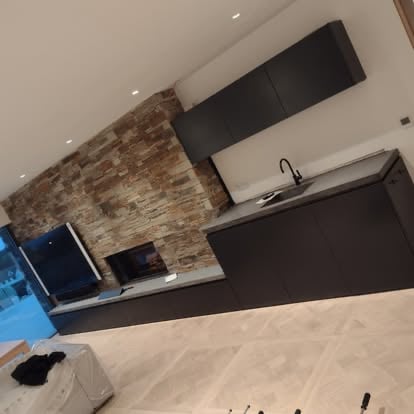
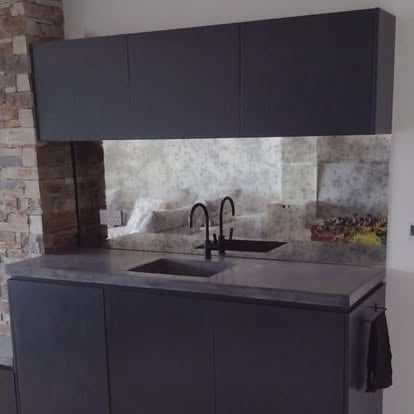
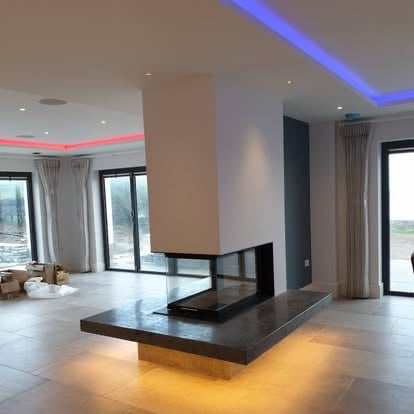
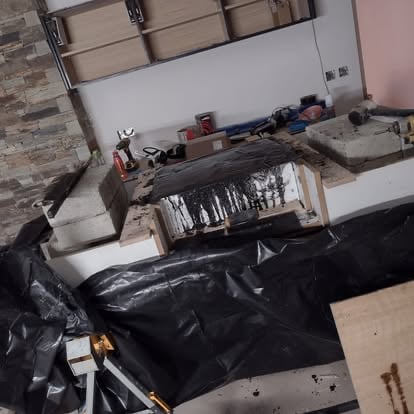
Cast concrete by Jonathan Heywood.
These pieces are natural, formed concrete — hand‑cast, ground and sealed. They are not microcement coatings.

Questions
Frequently asked.
Polished concrete or microcement — which should I choose?+
If the piece is meant to stand alone as a heavy, sculptural object — an island, a vanity, a hearth — polished concrete is usually the right call. If the goal is to wrap an existing surface seamlessly (walls, shower enclosures, floors over tile), microcement is the better fit. Many of our projects combine both: a polished concrete island sitting on a microcement floor.
Will it crack?+
Modern GFRC and fibre‑reinforced concrete mixes virtually eliminate the structural cracking older concrete worktops were known for. Hairline craze marks are part of the material's character and are stabilised inside the sealer. Movement joints are designed into larger floor pours to control where any future movement happens.
Is it stain‑proof?+
It is stain‑resistant when properly sealed. Spills are wiped off as you would any other premium worktop. Strong acids (neat lemon, vinegar left to dry) and dye‑heavy substances (turmeric, beetroot) should not be left to sit. Sealer is renewed every 12–24 months on worktops in heavy use.
How heavy is it?+
A 30mm worktop weighs around 70kg per square metre. Cabinetry is checked and reinforced where needed before installation. For very long runs, joints are designed at quiet points in the surface and finished so that the eye reads them as part of the composition.
How long does it take?+
From template to delivery, a kitchen worktop typically takes three to four weeks — most of that is cure and polish time. Floors poured in‑situ are walkable in 48 hours, grindable in 7–10 days and sealed roughly two weeks after the pour.
Bring this finish into your project.
Choosing between the two crafts
Microcement or polished concrete?
Two related materials, two very different building decisions. The honest comparison below should help you choose — or combine them, as many of our projects do.
Thickness & build-up
Microcement
2–3mm total — a coating over an existing surface.
Polished concrete
20–100mm — the surface itself, cast in place or in a mould.
Weight on the structure
Microcement
Negligible. Suits upper floors, timber decks, refurbishments.
Polished concrete
~70kg per m² at 30mm. Cabinetry and structure checked first.
Lift the existing floor?
Microcement
Rarely. Bonds over tile, screed, ply, MDF and most stable surfaces.
Polished concrete
New worktops drop in; in-situ floors usually need a fresh pour over a sound base.
Joints & seams
Microcement
Truly seamless — one continuous skin across walls, floors and worktops.
Polished concrete
Movement joints designed into large pours; cast pieces have considered joins at quiet points.
Best rooms
Microcement
Bathrooms, wet rooms, walls, stairs, full-floor refurbishments, kitchen walls and worktops over existing carcasses.
Polished concrete
Kitchen islands, vanities with integral basins, hearths, bath surrounds, sculptural pieces, new-build floors.
Typical cost direction
Microcement
Lower invasive cost — no lifting, no skips. Hand-applied premium finish, priced per project.
Polished concrete
Higher per piece — heavier material, longer cure and polish process, more structural work.
Finish & look
Microcement
Hand-burnished, mineral, soft. Reads as continuous skin — closer to fine plaster than stone.
Polished concrete
Dense, weighty, architectural. Honed matte to deep polish; aggregate optional.
Not sure which suits your project?
Book a site visit