
Bathrooms · 7 min read
Microcement vs tiles for bathrooms: an honest comparison
Cost, durability, look, grout and longevity — a fair‑minded comparison from someone who fits both.
By Jonathan Heywood · 18 February 2025
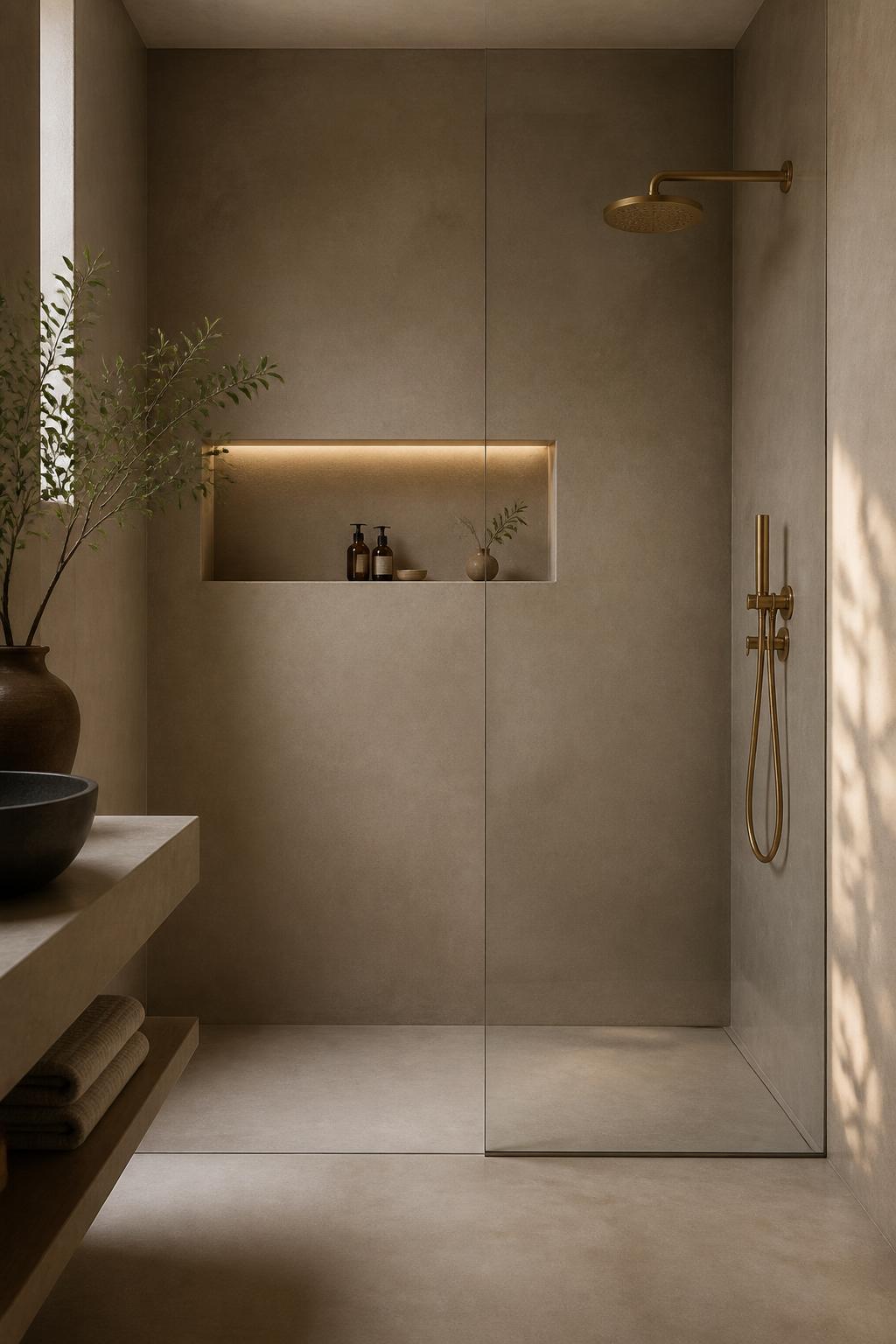
Every microcement bathroom we install is one fewer bathroom tiled. So it would be easy for this article to be a sales pitch. It isn't. Both materials have their place. Here, as honestly as we can put it, is when each one wins.
The look
Tiles give you pattern, repetition and a visible grid. In the right hands — Moroccan zellige, Italian marble mosaics, hand‑glazed crackle subway — they are stunning. In the wrong hands they look like a bathroom catalogue.
Microcement gives you continuity. No grid for the eye to organise around. The room reads larger and quieter. Brassware, mirrors and joinery become the only points of contrast.
Waterproofing
Tiles themselves are waterproof, but the system around them — grout, silicone seals, edge trims — is the weak link. Microcement, correctly installed with the CimentArt Aqua system over a tanked substrate, is a single waterproof skin.
Joints, grout and mould
A tiled shower has between 80 and 300 metres of grout line, depending on tile size. All of it eventually discolours, picks up soap residue and harbours mould. A microcement shower has none.
Cost
Like for like, microcement supplied and installed is comparable to a high‑quality stone or large‑format porcelain tile installation. Cheaper than marble or zellige. More expensive than budget ceramic.
Durability
Both systems should give you 20+ years if installed properly. Microcement edges ahead because there are no joints to fail and the surface can be re‑sealed in situ. Tiles edge ahead in raw scratch resistance under heavy abuse.
When tiles still win
- You actively want decorative pattern and colour repetition.
- You are working to the tightest possible budget — basic ceramic tiling will almost always be cheaper.
- You want a finish that requires absolutely no individual judgement — tiles are factory‑uniform; microcement is hand‑made.
When microcement wins
- You want the bathroom to feel like a spa, not a showroom.
- You want a walk‑in wet room without visible trims or transitions.
- You hate cleaning grout (everyone does).
- You're renovating a period property where rectilinear tiling looks awkward.
If you'd like to see a sample panel in your bathroom before you decide, book a site visit.