
Design · 6 min read
Choosing your microcement colour and finish: a practical framework
Matte vs satin vs gloss, warm tones vs cool, sample panels — and the question to ask before committing to a colour.
By Jonathan Heywood · 4 November 2024
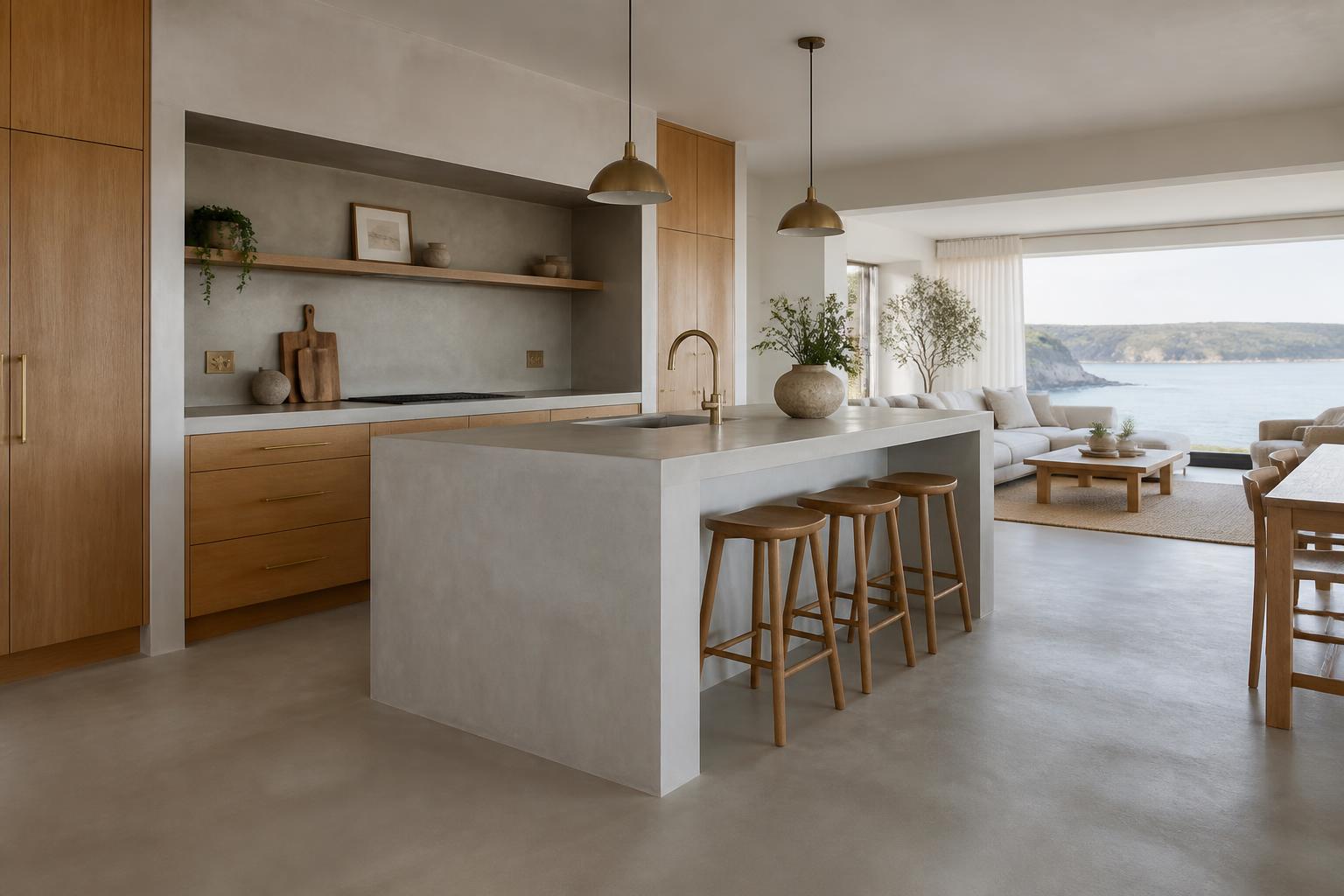
The CimentArt palette runs to more than thirty standard colours, and you can blend custom shades on top of that. The cumulative choice space is enormous. Here's the practical framework we walk every client through.
Step 1: Start with the light
The single most important variable is the light the room receives — and at what time of day you most use it. North‑facing rooms in Cornwall pull cool tones colder; south‑facing rooms warm everything by half a stop. A taupe that reads creamy in a Padstow estuary kitchen will read grey in a Bodmin Moor barn.
Step 2: Decide warm or cool, then narrow
- Warm — bones, ivories, sand, clay, mushroom, terracotta‑adjacent taupes. Pairs naturally with oak, brass, linen, terracotta and creamy plasters.
- Cool — soft whites, dove greys, putty, dark ink. Pairs with walnut, brushed nickel, stainless, deep greens and crisp whites.
Step 3: Choose finish — matte, satin, gloss
- Matte (most popular): velvety, hand‑plastered look. Reads quiet. Shows fingerprints slightly less on walls, slightly more on worktops.
- Satin: gentle sheen. The best compromise for bathrooms — easy to wipe down, still feels mineral.
- Low‑gloss: distinct sheen, almost waxed. Dramatic in dark colours; can read commercial in light colours.
Step 4: Sample panel in the actual room
Never commit to a colour from a chart, a phone screen, or even a sample seen in a different room. Cornwall Microcement applies a 30 × 30 cm sample panel in the actual room before any installation begins. You live with it for 48 hours, watch it through the day, and only then sign off.
The single question that prevents most regrets
"What is the largest item of permanent joinery, art or fabric in this room — and does the microcement need to support it or compete with it?"
If the room has a hero — a marble fireplace, a piece of art, a custom kitchen — the microcement should recede and frame it. If the room has nothing yet, the microcement can be the hero. Either is right. Knowing which one you're choosing is what matters.
If you'd like to walk through the palette in person, book a consultation — sample boards travel everywhere we go.